Have you ever wondered about the Gayatri mantra meaning and why millions of people worldwide chant these ancient Sanskrit words daily? What if understanding the true Gayatri mantra meaning could unlock profound wisdom, mental clarity, and spiritual transformation in your own life?
With over 18,000 people searching for “Gayatri mantra meaning” every month, seekers worldwide are discovering that this isn’t just a prayer—it’s a spiritual technology for illuminating consciousness. The Gayatri mantra meaning goes far beyond simple translation; it represents humanity’s quest for divine wisdom and liberation from ignorance.
In this comprehensive guide, you’ll discover the complete Gayatri mantra meaning—from word-by-word translation to its deeper spiritual significance, how this understanding transforms your practice, and why knowing the true Gayatri mantra meaning is essential for experiencing its full power.
Understanding the Gayatri Mantra Meaning: What Does This Sacred Prayer Really Mean?
When people search for “Gayatri mantra meaning,” they’re seeking more than a literal translation. The Gayatri mantra meaning encompasses multiple layers—linguistic, philosophical, and experiential. Let’s explore each dimension to truly understand what makes this mantra so transformative.
The Gayatri Mantra is the most revered prayer in Hindu spirituality, originating from the Rig Veda (Mandala 3.62.10), composed approximately 3,500 years ago. But the Gayatri mantra meaning transcends its historical origin—it represents humanity’s eternal quest for enlightenment.
The Gayatri mantra meaning can be understood at three levels:
- Literal Meaning: The direct translation of Sanskrit words
- Philosophical Meaning: The deeper spiritual concepts being invoked
- Experiential Meaning: What happens in your consciousness when you truly understand and chant with awareness
To fully grasp the Gayatri mantra meaning, we must explore all three levels. Only then can you experience the mantra’s complete transformative power.
The Complete Gayatri Mantra Meaning: Word-by-Word Translation
Understanding the complete Gayatri mantra meaning begins with knowing its exact words. The Gayatri mantra meaning unfolds through each syllable, creating a tapestry of spiritual wisdom. Here’s the mantra with detailed explanation:
Sanskrit (Devanagari):
ॐ भूर्भुवः स्वः
तत्सवितुर्वरेण्यं
भर्गो देवस्य धीमहि
धियो यो नः प्रचोदयात्
Transliteration (How to pronounce):
Om Bhur Bhuvah Svah
Tat Savitur Varenyam
Bhargo Devasya Dhimahi
Dhiyo Yo Nah Prachodayat

Word-by-Word Gayatri Mantra Meaning:
The Gayatri mantra meaning becomes crystal clear when we break down each word:
Om (ॐ): The primordial sound of the universe; the cosmic vibration that pervades all creation representing Brahman.
Bhur (भूः): The physical realm; Earth; the material plane of existence where our bodies reside.
Bhuvah (भुवः): The subtle realm; the atmosphere; the mental plane where thoughts and emotions exist.
Svah (स्वः): The celestial realm; heaven; the spiritual plane of pure consciousness.
Tat (तत्): “That”; referring to the ultimate, indescribable Supreme Reality.
Savitur (सवितुः): Of Savitur, the divine Sun; the illuminating principle; the source of all life and wisdom.
Varenyam (वरेण्यं): Most excellent; worthy of worship; deserving of our highest adoration.
Bhargo (भर्गो): Divine radiance; the effulgent light that destroys all darkness and impurities.
Devasya (देवस्य): Of the divine; belonging to the Supreme Being.
Dhimahi (धीमहि): We meditate upon; we contemplate with deep focus.
Dhiyo (धियो): Intellects; our mental faculties; the power of understanding.
Yo (यो): Who; which; that which.
Nah (नः): Our; belonging to us.
Prachodayat (प्रचोदयात्): May inspire; may illuminate; may guide and enlighten.
Complete Gayatri Mantra Meaning – Full Translation:
Now that we understand each word, let’s see the complete Gayatri mantra meaning in various translations:
Literal Gayatri Mantra Meaning: “Om. We meditate upon the divine light of that adorable Sun of spiritual consciousness. May that light illumine our intellects and guide us toward enlightenment.”
Swami Vivekananda’s Gayatri Mantra Meaning: “We meditate on the glory of that Being who has produced this universe; may She enlighten our minds.”
Practical Modern Gayatri Mantra Meaning: “O Divine Creator of the three worlds—physical, mental, and spiritual—we meditate upon Your most excellent, radiant light. May that divine brilliance illuminate our minds, destroy our ignorance, and guide our thoughts toward truth and wisdom.”
The beauty of the Gayatri mantra meaning lies in its universality. It doesn’t ask for wealth or success. Instead, the Gayatri mantra meaning centers on seeking the highest gift possible: the light of wisdom to dispel the darkness of ignorance.
READ MORE ABOUT SPIRITUALISM IN HINDUISM
The Deep Philosophical Gayatri Mantra Meaning: Beyond Literal Translation
While understanding the literal Gayatri mantra meaning is important, its deeper philosophical significance reveals layers of spiritual wisdom that transform how we perceive reality. The true Gayatri mantra meaning has profound implications for your spiritual journey.
The Three Realms in Gayatri Mantra Meaning (Bhur Bhuvah Svah)
A crucial aspect of the Gayatri mantra meaning is understanding “Om Bhur Bhuvah Svah”—called the Mahavyahriti. This part of the Gayatri mantra meaning represents three fundamental dimensions:
- Bhur (Physical Plane): The world we experience through our five senses—the tangible reality of matter and form. When you chant “Bhur,” you’re acknowledging your body and the material world.
- Bhuvah (Mental Plane): The realm of thoughts, emotions, desires, and mental constructs. It’s the world of psychology and subtle experiences. Chanting “Bhuvah” connects you to your inner mental landscape.
- Svah (Spiritual Plane): The highest dimension of pure consciousness, where the soul (Atman) exists in its pristine form. It represents spiritual awakening and divine connection.
By invoking these three realms, the Gayatri mantra meaning reminds us that we are multi-dimensional entities. Understanding this aspect of the Gayatri mantra meaning helps you realize you’re not just a physical body but a being existing across multiple planes of consciousness—which is fundamental to achieving moksha in Hinduism.
The Solar Symbolism in Gayatri Mantra Meaning: Savitur as Inner Light
Another essential dimension of the Gayatri mantra meaning is the solar symbolism. The Gayatri Mantra is dedicated to Savitur, but the Gayatri mantra meaning here is not about worshiping the physical sun. Ancient sages used the sun as a metaphor for the divine light of consciousness within us.
Just as the sun gives light without discrimination—shining equally on all—the divine consciousness within us shines impartially, offering wisdom to all who seek it. The sun represents:
- Consistency: The sun rises daily without fail, just as spiritual practice requires dedication
- Life-Giver: Without the sun, life cannot exist; without inner awareness, spiritual life cannot flourish
- Illuminator: The sun reveals what was hidden in darkness; wisdom reveals truth hidden by ignorance
When we meditate upon “that wondrous Spirit of the Divine Solar Being,” we’re actually turning our attention inward to discover the light of consciousness within ourselves—the same concept explored in the path to moksha in Hinduism.
Real-Life Example: The Story of Rajesh
Rajesh, a 32-year-old software engineer in Bangalore, lived what appeared to be a successful life—good salary, comfortable apartment, supportive family. Yet he felt perpetually anxious, his mind constantly racing with worries about deadlines and future uncertainties.
A colleague suggested he try chanting the Gayatri Mantra for just 10 minutes each morning. Skeptical but desperate, Priya tried it. Those 90 seconds became her daily anchor. Within two weeks, she extended to 10 repetitions (about 5 minutes). After a month, she woke up 15 minutes earlier to chant 27 times.
Six months later, Priya described the transformation: “I’m still busy. My life circumstances haven’t changed. But something fundamental shifted. I have this inner reservoir of calm that I can access even in chaos. When my toddler has a meltdown or my boss dumps a last-minute project on me, I mentally chant the Gayatri Mantra, and it’s like pressing a reset button.”
Arjun’s Academic Breakthrough
Arjun, a 19-year-old engineering student, struggled with concentration and exam anxiety. Despite studying for hours, his mind would blank during tests. After three consecutive failures in mathematics, he was on the verge of dropping out.
His grandfather, a lifelong Gayatri Mantra practitioner, taught him the mantra and asked him to chant it 27 times every morning before studying and 10 times before entering the exam hall.
Within two months, Arjun’s academic trajectory completely changed:
- His focus during lectures improved dramatically
- Study sessions became more productive (he retained more in less time)
- Exam anxiety reduced—his mind remained calm and clear during tests
- He passed all his exams and eventually graduated with honors
Arjun now teaches the Gayatri Mantra to his juniors, paying forward the gift his grandfather gave him.
Dr. Meera’s Professional Burnout Recovery
Dr. Meera, a 45-year-old oncologist, faced extreme burnout dealing daily with suffering and death. She developed compassion fatigue and secondary traumatic stress. Sleep deprivation and emotional exhaustion became her norm, and her blood pressure readings became concerning.
A senior colleague recommended chanting the Gayatri Mantra 108 times each morning before her shift. Initially resistant (who has that kind of time?), she finally agreed when her physician warned about her cardiovascular health.
Three months of consistent practice brought measurable changes:
- Blood pressure normalized without medication
- Sleep quality improved dramatically (confirmed by sleep tracking)
- Emotional resilience returned—she could hold space for patients’ suffering without absorbing it
- Colleagues noticed she seemed “present” again rather than functioning on autopilot
Dr. Meera now teaches Gayatri Mantra practice to medical residents as a sustainable tool for professional wellbeing.
Integrating Gayatri Mantra into Modern Life: Practical Tips
The ancient practice of Gayatri Mantra chanting can seamlessly integrate into contemporary lifestyles. Here’s how:
For Busy Professionals
Morning Routine: Set your alarm 15 minutes earlier. Those 15 minutes of Gayatri Mantra practice (27-54 repetitions) will make you more productive than 15 extra minutes of sleep.
Commute Practice: If you use public transport, chant silently (Manasik Japa) during your commute. Transform dead time into spiritual practice.
Work Breaks: Instead of scrolling social media during breaks, close your eyes and chant 3-5 times. Returns you to work refreshed and focused.
Before Important Meetings: Chant 10 times before presentations, negotiations, or challenging conversations. The clarity and calm it provides are remarkable.
For Students
Study Sessions: Begin each study session with 10 repetitions of Gayatri Mantra. Your comprehension and retention will noticeably improve.
Exam Preparation: The night before exams, chant 27-54 times to reduce anxiety and improve sleep quality.
Exam Day: Chant 10 times before entering the exam hall. Keep the mantra running mentally during the exam—it keeps your mind clear and calm.
Project Deadlines: When facing stressful deadlines, take 5-minute Gayatri Mantra breaks to reset your nervous system.
For Parents
Morning Blessing: Chant the Gayatri Mantra while your children are still sleeping, offering the benefits to them. It creates a peaceful energetic environment in your home.
Family Practice: Teach your children the Gayatri Mantra. Even young kids (5+) can learn it. Make it a family bonding ritual—10 minutes together each evening.
Patience Booster: When you feel frustrated or about to lose your temper with your kids, mentally chant 3 times. It creates a pause between stimulus and response.
For Seniors and Retirees
Health Maintenance: Use Gayatri Mantra practice as daily cognitive exercise. The memorization, pronunciation, and focus keep your mind sharp.
Spiritual Deepening: With more time available, dedicate 30-60 minutes to practice. This is the perfect life stage for deepening spiritual practices.
Community Building: Start or join a Gayatri Mantra chanting group. The collective energy amplifies individual practice and provides social connection.
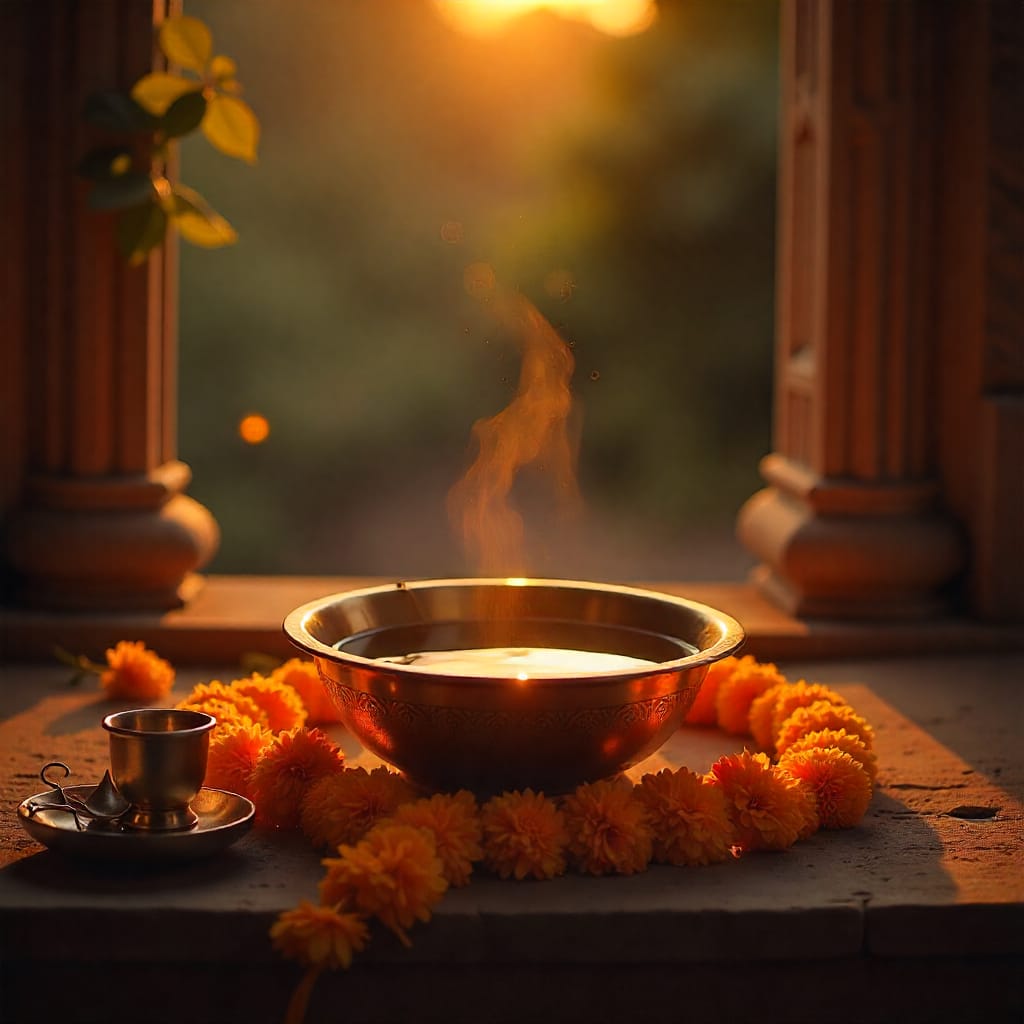
Creating a Sacred Space for Gayatri Mantra Practice
Even in a small apartment, you can create a dedicated practice space:
- Choose a Corner: Select a quiet corner that you associate with peace
- Add Sacred Elements: A small table or cloth, an image or statue you find inspiring, a candle, incense
- Keep It Clean: This space should remain uncluttered and clean
- Consistent Spot: Use the same spot daily. Over time, the space becomes charged with spiritual energy
The Connection Between Gayatri Mantra and Moksha
For those familiar with the ultimate goal of Hindu spirituality—moksha (liberation from the cycle of birth and death)—the Gayatri Mantra serves as a direct pathway.
The mantra explicitly requests: “May that divine light illumine our intellects.” This illumination is precisely what leads to moksha. When the intellect (Buddhi) is illuminated by divine wisdom:
- Ignorance (Avidya) dissolves: You realize your true nature as eternal consciousness (Atman), not the temporary body-mind
- Attachments loosen: You cease identifying with temporary pleasures and pains
- Discrimination (Viveka) awakens: You distinguish between the real (permanent) and unreal (temporary)
- Liberation emerges: Not as a distant goal but as a present reality—freedom from suffering while still living
The Bhagavad Gita teaches that knowledge (Jnana) is the ultimate purifier (Chapter 4, Verse 38). The Gayatri Mantra, by invoking divine illumination of knowledge, becomes a direct tool for achieving moksha.
Many enlightened sages—including Ramana Maharshi and Swami Sivananda—credited the Gayatri Mantra as foundational to their spiritual realization. Regular, sincere practice doesn’t just improve your life; it transforms your very understanding of existence.
Common Mistakes to Avoid in Gayatri Mantra Practice
Even with the best intentions, practitioners sometimes make mistakes that reduce effectiveness. Here are the most common errors and how to avoid them:
Mistake #1: Inconsistent Practice
The Error: Chanting intensively for a week, then stopping for two weeks, then restarting sporadically.
Why It Matters: The Gayatri Mantra’s transformative power accumulates through consistent daily practice. Sporadic practice is like watering a plant irregularly—it never fully flourishes.
The Solution: Commit to a minimum you can sustain (even just 3-10 repetitions daily). Consistency beats intensity.
Mistake #2: Mechanical Repetition Without Awareness
The Error: Chanting while mentally making a grocery list or planning your day—the words becoming empty sounds.
Why It Matters: The Gayatri Mantra is a meditation, not a mechanical task. The consciousness you bring to it determines its effect.
The Solution: Even if your mind wanders (and it will), gently return attention to the meaning of the words. Presence over perfection.
Mistake #3: Obsessing Over Counting
The Error: Becoming so focused on reaching 108 that you rush through, stressed about “completing” the practice.
Why It Matters: The goal isn’t quantity—it’s quality of connection. Better to chant 10 times with deep presence than 108 times with distracted rushing.
The Solution: Let the mala count for you. Your only job is to stay present with each repetition.
Mistake #4: Practicing While Extremely Fatigued
The Error: Forcing yourself to chant when you’re so exhausted you’re falling asleep.
Why It Matters: While dedication is admirable, practicing when you’re too tired to maintain awareness reduces effectiveness and can create negative association (practice becomes a chore).
The Solution: If extremely tired, either do a shorter practice (3-10 repetitions) with full attention, or skip that day and resume when rested. Self-compassion is spiritual.
Mistake #5: Expecting Specific Outcomes
The Error: Chanting with the attitude “I’ll do this for 40 days and then my life problems will disappear” or “This will definitely get me that promotion.”
Why It Matters: The Gayatri Mantra works on consciousness itself—the deepest level. Effects manifest in ways you can’t predict. Attachment to specific outcomes creates disappointment and blocks receptivity.
The Solution: Practice with open curiosity: “I’ll chant sincerely and observe what unfolds.” Trust the process.
Mistake #6: Comparing Your Progress to Others
The Error: Feeling discouraged because someone else reports profound experiences while yours seem subtle or nonexistent.
Why It Matters: Everyone’s spiritual journey is unique. Comparing creates unnecessary suffering and distracts from your own authentic experience.
The Solution: Honor your individual path. Some people have dramatic breakthroughs; others experience gradual, steady transformation. Both are valid.
Mistake #7: Practicing Without Proper Posture
The Error: Chanting while slouched, lying down, or in positions that constrict breath.
Why It Matters: Posture affects energy flow. A collapsed spine blocks the upward movement of spiritual energy (Kundalini).
The Solution: Sit with spine erect (imagine a string pulling the crown of your head upward) but relaxed. Shoulders back, chest open. This allows optimal breathing and energy circulation.
Gayatri Mantra in Different Hindu Traditions
Different schools of Hindu philosophy and various gurus approach the Gayatri Mantra with slightly different emphases:
Advaita Vedanta Perspective
Advaita (non-dualism) views the Gayatri Mantra as a tool for realizing the fundamental oneness of Atman (individual soul) and Brahman (universal consciousness). When we chant “Tat Savitur Varenyam,” “Tat” (That) refers to Brahman—the ultimate reality beyond name and form. The prayer for illumination of intellect is the awakening to non-dual awareness: realizing “I am That.”
Bhakti (Devotional) Perspective
Bhakti traditions emphasize the devotional aspect of the Gayatri Mantra—approaching it as loving communion with the Divine Mother (Gayatri is often personified as a goddess). The practice becomes an offering of love, and the chanting itself is the goal, not what it might achieve. The relationship between devotee and divine is central.
Yoga Tradition
Yogic interpretations focus on the Gayatri Mantra’s effect on the chakras and energy systems. Each syllable activates specific energy centers:
- Om: Crown chakra (Sahasrara)
- Bhur Bhuvah Svah: Root, sacral, and solar plexus chakras
- Tat Savitur: Heart chakra (Anahata)
- The complete mantra: Third eye (Ajna)
Tantra Perspective
Tantric approaches view the Gayatri Mantra as a vibrational tool (Shabda Brahman—the sound-form of divine consciousness). The specific sound frequencies created by correct pronunciation generate energetic effects at subtle levels, working on the nadis (energy channels) and kundalini.
All these perspectives are valid and complementary. Your own understanding may blend elements from different traditions based on what resonates with your temperament and spiritual inclination.
Scientific Research on Gayatri Mantra and Meditation
While ancient sages knew the Gayatri Mantra’s power experientially, modern science is beginning to validate these claims:
Neuroscience Studies
Research from institutions like Harvard Medical School and the Massachusetts General Hospital has shown that meditation practices (including mantra chanting) create measurable changes in brain structure:
- Increased gray matter density in the hippocampus (memory and learning)
- Thicker prefrontal cortex (executive function, decision-making)
- Reduced amygdala volume (fear and anxiety center)
- Enhanced connectivity between brain regions
Stress Reduction Research
Multiple studies demonstrate that mantra meditation significantly reduces cortisol levels and activates the parasympathetic nervous system. A 2015 study published in the Journal of Evidence-Based Complementary & Alternative Medicine found that participants practicing mantra meditation showed:
- 23% reduction in cortisol levels
- Improved heart rate variability
- Lower blood pressure
- Enhanced immune function markers
Cognitive Enhancement Studies
Research on Transcendental Meditation (which uses Sanskrit mantras) shows improvements in:
- Working memory capacity
- Sustained attention
- Processing speed
- Creative problem-solving
While specific studies on the Gayatri Mantra are limited (most research focuses on generic “mantra meditation”), practitioners report similar benefits.
The Biofield Hypothesis
Emerging research in biofield science suggests that specific sound frequencies affect the electromagnetic field surrounding the body. The Gayatri Mantra’s vibrational pattern may optimize this biofield, promoting physical and mental wellbeing.
Conclusion: Your Journey with the Gayatri Mantra Begins Now
The Gayatri Mantra is not just an ancient relic—it’s a living, breathing spiritual technology available to anyone seeking clarity, peace, and wisdom. Whether you’re a busy professional, a stressed student, a spiritual seeker, or someone simply looking for inner peace, the Gayatri Mantra offers a proven pathway.
The beauty of the Gayatri Mantra lies in its simplicity and accessibility. You don’t need elaborate rituals, expensive equipment, or years of preparation. You simply need:
- A sincere heart
- A few minutes of dedicated time
- Willingness to practice consistently
- Openness to transformation
Remember Rajesh, the anxious software engineer? Priya, the overwhelmed mother? Arjun, the failing student? Dr. Meera, the burned-out physician? Their lives transformed not through dramatic interventions but through the simple, consistent practice of chanting the Gayatri Mantra.
Your transformation begins with a single chant. Today. Right now.
The divine light that the Gayatri Mantra invokes isn’t somewhere far away—it’s already within you, waiting to be awakened. The mantra is simply the key that unlocks what you already possess: infinite wisdom, unshakeable peace, and boundless love.
As the Upanishads declare: “Asato Ma Sad Gamaya, Tamaso Ma Jyotir Gamaya” (Lead me from untruth to truth, from darkness to light). The Gayatri Mantra is your guide on this eternal journey.
Start today. Chant with sincerity. Trust the process. Let the divine light illuminate your path.
Quick Start Guide: Your First Week with Gayatri Mantra
Day 1-2: Learn the pronunciation. Listen to authentic recordings. Don’t worry about meaning yet—just get comfortable with the sounds.
Day 3-4: Begin chanting 3 times aloud each morning. Focus on correct pronunciation.
Day 5-6: Increase to 10 repetitions. Start learning the word-by-word meaning.
Day 7: Chant 10 times while contemplating the meaning. Notice any shifts in your mental state.
Week 2 onwards: Gradually increase as feels comfortable. Consistency matters more than quantity.
Final Blessing
May the divine light of Savitur illumine your intellect. May wisdom replace ignorance in your consciousness. May you discover the infinite peace that is your true nature. May the sacred vibrations of the Gayatri Mantra guide you toward ultimate liberation.
Om Tat Sat 🙏
Now it’s your turn! Have you started practicing the Gayatri Mantra? What has been your experience? Share your journey in the comments below. Let’s support each other on this beautiful path of spiritual awakening!
Related Articles You May Find Helpful:
- What is Moksha in Hinduism? Ultimate Guide to Liberation 2025
- Karma Yoga Explained — Meaning, Principles, Benefits & Practical Guide
Disclaimer: While the Gayatri Mantra offers numerous benefits, it should complement—not replace—professional medical or psychological treatment when needed. Always consult healthcare professionals for serious physical or mental health concerns. desperate, Rajesh began. For the first week, nothing seemed to change. His mind wandered, pronunciation felt awkward, and he questioned if it was worth the effort.
But he persisted. By the third week, something subtle shifted. The racing thoughts didn’t disappear, but he found himself less entangled in them. By the second month, colleagues noticed he seemed calmer, more focused.
Six months later, Rajesh described the transformation: “The Gayatri Mantra didn’t solve my external problems, but it completely changed my relationship with them. I still have deadlines and challenges, but now there’s an inner light—a sense of clarity—that helps me navigate them without losing my peace.”
This is precisely what “Dhiyo Yo Nah Prachodayat” means in practice—the divine light guiding our intellect through life’s complexities.

15 Powerful Benefits of Chanting the Gayatri Mantra
The Gayatri Mantra offers benefits that span physical, mental, emotional, and spiritual dimensions. Here are the scientifically-validated and traditionally-recognized benefits:
Physical Benefits of Gayatri Mantra:
1. Improves Cardiovascular Health: The rhythmic chanting regulates breathing patterns, creating approximately 3-4 breaths per minute—significantly slower than the average 12-20 breaths. This controlled breathing improves cardiovascular efficiency and reduces blood pressure.
2. Boosts Immune System Function: Regular mantra meditation has been shown to reduce inflammatory markers in the blood and enhance immune response, helping your body fight infections more effectively.
3. Reduces Chronic Pain: The deep relaxation induced by Gayatri Mantra chanting triggers the release of endorphins, the body’s natural painkillers, providing relief from chronic pain conditions.
4. Enhances Sleep Quality: Practitioners report significantly improved sleep patterns. The calming effect on the nervous system helps combat insomnia and promotes deeper, more restorative sleep.
Mental & Cognitive Benefits of Gayatri Mantra:
5. Sharpens Focus and Concentration: Brain wave synchronization during chanting increases alpha waves (8-12 Hz), associated with relaxed alertness—the optimal state for learning and productivity. Students particularly benefit from enhanced concentration during studies and exams.
6. Improves Memory Retention: The specific vibrations of the Gayatri Mantra stimulate the hippocampus, the brain region crucial for learning and memory. Regular practitioners report better recall and information retention.
7. Enhances Mental Clarity: By reducing mental clutter and incessant thought patterns, the Gayatri Mantra creates space for clarity and insight. Decision-making becomes easier and more intuitive.
8. Activates Whole-Brain Thinking: The mantra’s vibrations synchronize the left and right hemispheres of the brain, promoting integrated thinking that combines logic with intuition.
Emotional & Psychological Benefits of Gayatri Mantra:
9. Reduces Stress and Anxiety: Multiple studies demonstrate that mantra chanting significantly lowers cortisol (the primary stress hormone), activating the parasympathetic nervous system’s “rest and digest” response.
10. Alleviates Depression: The uplifting vibrations and spiritual connection fostered by the Gayatri Mantra help combat depressive symptoms by releasing serotonin and dopamine—the brain’s “feel-good” chemicals.
11. Builds Emotional Resilience: Regular practice creates an inner reservoir of peace that remains accessible even during challenging circumstances. You become less reactive and more responsive to life’s ups and downs.
12. Dissolves Fear and Negative Thoughts: The protective quality of the Gayatri Mantra (remember, “Gayatri” means “that which protects the singer”) creates a spiritual shield against negative mental patterns and external negative influences.
Spiritual Benefits of Gayatri Mantra:
13. Awakens Spiritual Consciousness: The Gayatri Mantra is specifically designed to activate the higher chakras—particularly the Ajna (third eye) and Sahasrara (crown) chakras—facilitating spiritual awakening and expanded awareness.
14. Purifies the Mind and Karma: Ancient texts state that the Gayatri Mantra burns through negative karmic impressions (samskaras) accumulated over lifetimes, purifying consciousness and accelerating spiritual evolution toward moksha.
15. Connects You to Divine Wisdom: The ultimate benefit of the Gayatri Mantra is what it explicitly requests—illumination of the intellect by divine light. This isn’t metaphorical; practitioners report genuine insights, intuitive guidance, and a felt sense of connection to something greater than themselves.
How to Chant the Gayatri Mantra Correctly: Complete Step-by-Step Guide
Many people want to chant the Gayatri Mantra but feel intimidated by Sanskrit pronunciation or unsure about the proper method. This section eliminates all confusion with a crystal-clear, practical guide.
Perfect Pronunciation Guide for Gayatri Mantra
Correct pronunciation amplifies the Gayatri Mantra’s effectiveness because specific syllables create specific vibrational effects. Here’s a detailed phonetic breakdown:
Om (ॐ) – Pronounce: “AUM” (rhymes with “home” but starts with “ah”). Feel the vibration begin in your belly, rise through your chest, and resonate in your head. Don’t rush it; let the “mmm” sound reverberate.
Bhur (भूः) – Pronounce: “Bhoor” (like “boor” with an aspirated “bh” sound). The “bh” should have a breathy quality, not a hard “b”. Ends with a slight “h” sound (visarga): “bhooḥ”
Bhuvah (भुवः) – Pronounce: “Bhu-wah” or “Bhu-vah”. Soft aspirated “bh”. Ends with visarga: “bhu-waḥ”
Svah (स्वः) – Pronounce: “Swa-ha” or “Su-wah”. The “s” should be soft. Ends with visarga.
Tat (तत्) – Pronounce: “Taht” (rhymes with “but”). Short, crisp sound.
Savitur (सवितुः) – Pronounce: “Sah-vee-toor”. Three syllables, emphasis on the first: “SAH-vee-toor”
Varenyam (वरेण्यं) – Pronounce: “Vah-rain-yam” or “Vah-ren-yam”
Bhargo (भर्गो) – Pronounce: “Bhar-go”. Aspirated “bh” again.
Devasya (देवस्य) – Pronounce: “Day-vahs-ya”. Three clear syllables.
Dhimahi (धीमहि) – Pronounce: “Dhee-mah-hee”. Aspirated “dh” (tongue touches upper palate). Three syllables with equal emphasis.
Dhiyo (धियो) – Pronounce: “Dhee-yo”. Two syllables.
Yo (यो) – Pronounce: “Yo” (like “yo-yo”)
Nah (नः) – Pronounce: “Nah” (rhymes with “ma”)
Prachodayat (प्रचोदयात्) – Pronounce: “Prah-cho-dah-yaht”. Four syllables: “Prah-CHO-dah-yaht”
7 Common Pronunciation Mistakes to Avoid
Mistake #1: Adding Extra “Ha” Sounds – Many beginners pronounce “Bhuvah” as “Bhu-va-ha” (three syllables) when it should be “Bhu-vaḥ” (two syllables with a breath release).
Mistake #2: Rushing Through the Gayatri Mantra – Quality supersedes quantity. It’s better to chant 10 times with clear pronunciation than 108 times hurriedly with slurred words.
Mistake #3: Incorrect Stress Patterns – Some words have natural emphasis: “SAH-vee-toor,” not “sah-VEE-toor.”
Mistake #4: Mispronouncing Aspirated Consonants – “Bh,” “dh,” and “th” in Sanskrit are aspirated. “Bhur” is not “bur”; it’s “bhoor” with breath.
Mistake #5: Treating It Like a Race – The Gayatri Mantra is meditation, not a task to complete. Each word should resonate in your consciousness.
Mistake #6: Ignoring the Visarga (ḥ) – The subtle aspiration at the end of Bhur, Bhuvah, and Svah is important for proper energy flow.
Mistake #7: Not Listening to Authentic Recordings – Find genuine recordings by traditional chanters to internalize the correct rhythm and pronunciation.
Complete Practice Method: Beginner to Advanced
Preparation (5 minutes)
- Choose Your Time for Gayatri Mantra: The most powerful times are:
- Brahma Muhurta (90 minutes before sunrise, 4:30-5:30 AM)
- Sunrise (as the sun appears)
- Noon (when the sun is at its peak)
- Sunset (as the sun descends)
- However, you can chant anytime—regularity matters more than timing
- Find a Quiet Space: Choose a clean, peaceful spot where you won’t be disturbed.
- Sit Comfortably:
- Preferred: Cross-legged on the floor (Padmasana or Sukhasana)
- Alternative: Chair with feet flat, spine straight
- Your spine should be erect but not strained
- Face the Right Direction:
- Morning: Face East (toward rising sun)
- Evening: Face West (toward setting sun)
- Set Your Intention (Sankalpa): Mentally state why you’re chanting: “May this practice bring clarity to my mind” or “May divine wisdom guide my decisions”
Chanting Practice
For Beginners (First Month):
- Start with 10 Repetitions of Gayatri Mantra
- Chant aloud to hear your own voice
- Follow along with a YouTube video or audio recording
- Focus on one line at a time
- Don’t worry about perfection—sincere effort matters most
For Intermediate Practitioners (After First Month):
- Increase to 27 or 54 Repetitions
- Use a mala (prayer beads) to count
- Mix loud and soft chanting:
- First 9: Aloud (Vaikhari Japa)
- Next 9: Whispered (Upanshu Japa)
- Final 9: Mental/Silent (Manasik Japa)
- Visualize the sun’s brilliant light entering through your crown chakra
For Advanced Practitioners (After 3-6 Months):
- Complete 108 Repetitions using a 108-bead mala
- Chant silently (Manasik Japa)—the most powerful form
- Meditate on each word’s meaning
- Feel the vibration in different body parts
Closing Practice (2-3 minutes)
- Sit in silence for 2-3 minutes after completing your set
- Offer gratitude to the divine and sages
- Slowly open your eyes
- Carry the peace forward into your day
Using a Mala (Prayer Beads) for Gayatri Mantra
A mala helps you count repetitions without mental distraction.
Choosing Your Mala:
- Rudraksha beads: Traditional for spiritual practices
- Tulsi beads: Sacred and purifying
- Sandalwood beads: Fragrant and calming
- Crystal beads: Clear quartz, rose quartz, or amethyst
How to Use:
- Hold the mala in your right hand, draped over the middle finger
- Use your thumb to pull each bead toward you as you complete one repetition
- Never use your index finger
- Start at the first bead next to the Guru bead (the larger bead)
- When you reach the Guru bead after 108, don’t cross it—reverse direction if continuing
When and How Many Times Should You Chant the Gayatri Mantra?
The Sacred Numbers in Gayatri Mantra Practice
3 Times: The absolute minimum for invoking the mantra’s energy. Good for beginners or when time is limited.
10 Times: Recommended for busy professionals (3-5 minutes daily).
27 Times: A quarter mala. Balances accessibility with significant spiritual impact (10 minutes).
54 Times: Half a mala. For serious practitioners (15-18 minutes).
108 Times: The most sacred number, representing spiritual completion. One full mala (20-25 minutes).
1008 Times: For special occasions or retreats (3-4 hours).
Why 108? The Sacred Significance
The number 108 holds deep significance:
- The distance from Earth to the Sun is approximately 108 times the Sun’s diameter
- There are 108 energy lines (nadis) converging at the heart chakra
- There are 108 Upanishads
- 1 + 0 + 8 = 9, the number of completion
Best Time to Chant Gayatri Mantra
According to Vedic tradition:
Sunrise (Prātaḥkāla): Most powerful time. The rising sun’s energy aligns perfectly with the solar symbolism of the Gayatri Mantra. Chanting at sunrise purifies the mind and sets a positive tone for the entire day.
Noon (Madhyāhna): When the sun is at its zenith, representing peak consciousness. Good for focus and clarity.
Sunset (Sāyaṃkāla): As the sun sets, it’s ideal for reflection and releasing the day’s stress. Traditionally considered highly auspicious.
Brahma Muhurta (3:30-5:30 AM): The “Creator’s Hour” when cosmic energy is most conducive to spiritual practices. Advanced practitioners prefer this time.
However: Consistency matters more than timing. If you can only chant at 9 PM before bed, that’s far better than not chanting at all because you can’t wake up at sunrise.
Gayatri Mantra vs Other Popular Mantras: What’s the Difference?
Many seekers wonder how the Gayatri Mantra compares to other popular mantras. Here’s a clear comparison:
Gayatri Mantra vs Om Namah Shivaya
Om Namah Shivaya is a devotional mantra dedicated to Lord Shiva, meaning “I bow to Shiva” or “Salutations to the auspicious one.”
Key Differences:
- Purpose: Om Namah Shivaya is primarily devotional (Bhakti), while Gayatri Mantra seeks wisdom and enlightenment
- Energy: Shiva mantra invokes transformative, purifying energy; Gayatri invokes illuminating, clarifying energy
- Accessibility: Both are open to all, but Om Namah Shivaya is simpler for absolute beginners
- Effect: Om Namah Shivaya removes obstacles and negative patterns; Gayatri illuminates the intellect
When to Choose: Choose Om Namah Shivaya if you feel drawn to Shiva’s energy or need transformation. Choose Gayatri Mantra if you seek mental clarity and spiritual wisdom.
Gayatri Mantra vs Mahamrityunjaya Mantra
Mahamrityunjaya Mantra is a powerful healing mantra also dedicated to Lord Shiva, specifically for protection from untimely death and serious illness.
Key Differences:
- Purpose: Mahamrityunjaya is for healing and protection; Gayatri is for enlightenment
- Usage: Mahamrityunjaya is often chanted during health crises; Gayatri is for daily spiritual practice
- Complexity: Both are equally complex in pronunciation
- Effect: Mahamrityunjaya works on physical/vital level; Gayatri works on intellectual/spiritual level
Gayatri Mantra vs Om (Aum)
Om is the most fundamental mantra, representing the sound of the universe itself.
Key Differences:
- Simplicity: Om is a single syllable; Gayatri is a complete verse
- Scope: Om is universal; Gayatri is specifically for intellectual illumination
- Practice: Om can be chanted alone or with other mantras; Gayatri is complete by itself
- Level: Om is foundational; Gayatri is more advanced in meaning
Complementary Use: Many practitioners chant Om 3 times before beginning Gayatri Mantra practice, creating a powerful synergy.
Who Can Chant the Gayatri Mantra? Breaking Traditional Barriers
Historically, there were restrictions on who could chant the Gayatri Mantra—it was traditionally reserved for initiated Brahmin males who had undergone the sacred thread ceremony (Upanayana). However, modern spiritual understanding has evolved significantly.
The Contemporary View
Modern spiritual teachers and reformed Hindu movements now widely agree that the Gayatri Mantra is universal:
- Women: Absolutely can and should chant the Gayatri Mantra. Many female saints and practitioners have attained enlightenment through this mantra
- All Castes: Spiritual wisdom knows no caste boundaries. The light of consciousness shines equally in all hearts
- Non-Hindus: Anyone sincerely seeking truth and wisdom can benefit from the Gayatri Mantra
- Children: Can begin learning the mantra as early as age 5-7 with proper guidance
Swami Vivekananda’s Revolutionary Statement: “Religion is the manifestation of the divinity already in man… Women have the same right as men to be taught the Vedas.”
The Bhagavad Gita’s Position: Krishna declares that anyone—regardless of birth, gender, or background—who takes refuge in Him can attain the supreme goal (Chapter 9, Verse 32).
The Only Real Requirement
The true qualification for chanting the Gayatri Mantra isn’t gender, caste, or religious background—it’s sincere intention and respect. Approach the mantra with:
- Reverence for its sacred nature
- Genuine desire for spiritual growth
- Willingness to practice regularly
- Humility and openness to wisdom
If you possess these qualities, the Gayatri Mantra will work its transformative magic regardless of yourDifferent types of mala beads.
FAQ About Gayatri Mantra
Can I chant Gayatri Mantra during menstruation?
Traditional restrictions suggested women shouldn’t chant during menstruation, but modern spiritual understanding recognizes this as outdated. Yes, you can chant during your period. Menstruation is a natural biological process, not spiritual impurity. The divine light of the Gayatri Mantra doesn’t discriminate based on bodily functions.
Can I chant Gayatri Mantra silently in my mind?
Absolutely yes! In fact, Manasik Japa (mental chanting) is considered the most powerful form of mantra practice. Silent chanting:
Can be done anywhere, anytime (during commute, while walking, before sleep)
Develops deeper concentration
Is more internalized and spiritually potent
Doesn’t disturb others
Start with audible chanting to establish correct pronunciation and rhythm, then gradually move to silent practice as you advance.
What if I mispronounce the Gayatri Mantra?
Don’t worry! The purity of your intention matters far more than perfect pronunciation. The divine responds to sincerity, not linguistic perfection. That said:
Do your best to learn correct pronunciation
Use audio recordings as guides
Improve gradually over time
Trust that your sincere effort is honored
Even if your Sanskrit isn’t perfect, the vibrational benefit and spiritual connection will still occur.
How long before I see results from Gayatri Mantra?
This varies by individual, but general patterns emerge:
Week 1-2: Subtle calming effect, slight improvement in sleep Week 3-4: Noticeable reduction in anxiety, better focusMonth 2-3: Significant mental clarity, emotional stability Month 6+: Profound transformation in consciousness, intuitive insights
Important: Approach the Gayatri Mantra as a lifelong practice, not a quick fix. Some benefits manifest immediately; deeper spiritual fruits ripen over years.
Can I chant Gayatri Mantra for someone else (like a sick family member)?
Yes! You can dedicate your Gayatri Mantra practice to another person’s wellbeing. After chanting, mentally offer the spiritual merit:
“May the benefits of this practice bring healing/peace/wisdom to [person’s name].”
Many practitioners report positive effects when chanting for loved ones, though it’s important to maintain realistic expectations—mantras support healing but don’t replace medical treatment.
Should I chant Gayatri Mantra before eating?
While not mandatory, chanting before meals is a beautiful practice:
Chant 3 times before eating to sanctify the food
Offer gratitude: “May this food nourish my body for divine service”
Creates mindful eating habits
This transforms eating from a mechanical act into a spiritual offering.
Can Gayatri Mantra help in exams and studies?
Absolutely! Students find the Gayatri Mantra particularly beneficial:
Before studying: Chant 10-27 times to enhance focus and comprehension
Before exams: Chant 27-54 times to calm nerves and improve recall
Daily practice: Develops long-term memory, concentration, and mental stamina
Many students report that consistent Gayatri Mantra practice improved their academic performance significantly—not through magic, but through enhanced cognitive function and reduced anxiety.
What’s the difference between chanting Gayatri Mantra with or without “Om Bhur Bhuvah Svah”?
The complete Gayatri Mantra includes “Om Bhur Bhuvah Svah” (the Mahavyahriti). However, you may encounter versions that begin directly with “Tat Savitur Varenyam.”
With Mahavyahriti (Recommended): More powerful and complete. The three realms invocation amplifies the mantra’s effect.
Without Mahavyahriti: Still effective but less comprehensive. Some traditional contexts use this shorter version.
Best Practice: Always include “Om Bhur Bhuvah Svah” for full benefit unless following a specific tradition that prescribes otherwise.
Related Articles for Deeper Practice
- What is Moksha in Hinduism? Understanding Ultimate Liberation
- Understanding Karma and Reincarnation in Hinduism
- Karma Yoga in Hindusim
- What Are Chakras in Hinduism? Understanding Your Energy Body
- Spiritualism in hindusim
- Morning Spiritual Routine
- Dharma In Hinduism
- Om Mantra Benefits: Complete Guide to the Sacred Sound of the Universe
7 replies on “Gayatri Mantra Meaning: Complete Guide to This Sacred Prayer’s Deep Significance (2025)”
[…] Gayatri Mantra Meaning: Complete Spiritual Guide […]
[…] Gayatri Mantra Meaning: Complete Spiritual Guide […]
[…] Gayatri Mantra Meaning: Complete Spiritual Guide […]
[…] Gayatri Mantra Meaning: Complete Spiritual Guide […]
[…] Gayatri Mantra Meaning: Complete Spiritual Guide […]
This was such a deep dive into the Gayatri Mantra, thank you! I’ve been trying to integrate the morning practice as you suggested for busy professionals, but I’m currently in the middle of a stressful relocation to Spain. It’s tough to keep that “inner reservoir of calm” when dealing with European bureaucracy. Does anyone have advice on maintaining a spiritual routine while traveling or handling intense paperwork? For instance, I’m using https://e-residence.com/pt/nie-spain-online/marbella/ to sort out my residency docs in Marbella so I can finally settle into a permanent meditation space, but the transition period is chaotic. Would you recommend shorter, more frequent chants during such high-stress moving phases, or is it better to stick to one long session even if the environment isn’t “sacred” yet?
This article provides such a clear breakdown of the Gayatri Mantra; I especially appreciated the section on mental clarity for professionals. As a long-time practitioner, I’ve noticed a huge shift in my focus, but I recently came across a resource discussing specific supplementary practices and was wondering if they align with the traditional Vedic approach. I found some mentions of it here guiadeVbetbrasil.com but the site seems to be having some technical issues on my end—has anyone else in this community heard of these specific meditation aids or is it better to just stick to the pure mantra recitation as described in your guide?